2018年5月17日星期四

Murder provokes Didi to revamp services

Didi killing case, Didi hitching service revamp, China ride-hailing service
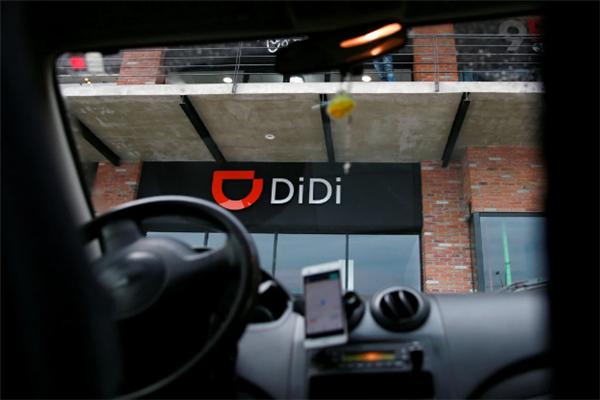
Shanghai (Gasgoo)- China's ride-sharing company Didi Chuxing (hereinafter Didi) will disable all of rating and tagging functions from its hitching service, the company announced on May 16. To win back users' trust after the killing of a female passenger, Didi will also intensify the inspection of driver's qualification based on the platform and improve its emergency help function. The revamp will be completed before May 31.
The 21-year-old flight attendant was purportedly raped and killed by her driver has triggered a drastic query about the safety of ride-hailing service. Meanwhile, the exposure that Didi' drivers tag female passenger by their appearance disgraces the company as well.
Didi took a range of measures to ease the public's anger and save the company's image loss. From May 12, Didi suspended its hitching service nationwide to conduct one-week internal inspection and rectification. On May 16, the company said it will temporarily reject the orders between 10 pm to 6 am.
Besides, the facial recognition must be mandatory for all drivers in case of imposture of drivers' accounts. Reportedly, the male suspect, who purportedly killed the young flight attendant, used the account belonging to his father, while without being detected. After the tragedy happened, Didi also admitted its facial recognition function was imperfect.
In addition, Didi has said the profile pictures of passengers on the carpooling platform will be replaced by the system's default images, which terminates the rating and tagging of passengers. Many users, especially women, have removed their selfies on the platform for the sake of self-protection.
All Rights Reserved. Do not reproduce, copy and use the editorial content without permission. Contact us: autonews@gasgoo.com.
Install Gasgoo APPAnytime and anywhere to know the dynamics of China's auto industry
 

Faraday Future’s Chinese headquarter likely to announce operation on May 18

China auto market news, Faraday Future latest progress, FF 91, Jia Yueting,
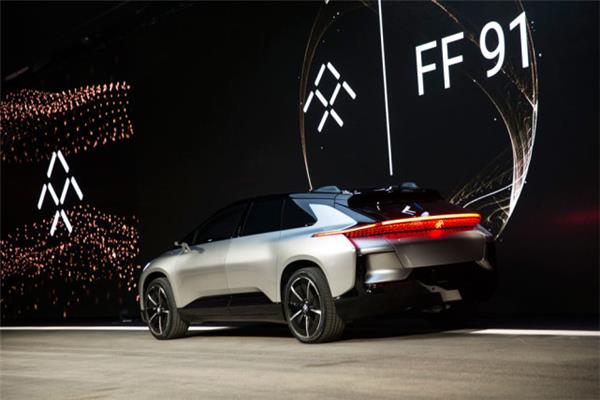
Shanghai (Gasgoo)- Faraday Future (FF) will have a big story on May 18, according to the sources from Sina Weibo on May 17. At the same time, Chen Zhe, director of FF's global marketing and communication, also spread the news that "Big Story is coming" on WeChat.
The released information may signal that FF is likely to announce on May 18 that its Chinese headquarters will officially start operation.
In addition, FF disclosed the preorder information at its official Weibo account on May 16, according to local media. Part of Weibo users said that they had received FF's official invitation of experiencing the FF91 at the end of April.
It is disclosed from FF's official network that the company has been recruiting engineers and salesmen in Guangzhou, Shanghai and Beijing on a large scale.
The only thing that can be confirmed is that the FF91 has arrived in Beijing at the end of April. Moreover, it is also rumored that Jia Yueting has returned to China, in order to make preparation for the mass-production of the FF 91 in China.
At the beginning of April, FF's affiliated company, Ruichi Intelligent Automobile Co., Ltd. (Ruichi) gained an area of 401,000 square meters in Nansha District, Guangzhou through bidding. Since then, the news that FF may prepare for the local production of its models was widely spread.
On the afternoon of May 11, FF released a letter to celebrate FF's four-year anniversary of foundation, confirming that FF will see its Hanford plant's official construction and the installation of manufacturing equipment in May. What's more, FF's Chinese headquarters will be based in Guangzhou, and the Guangzhou factory will start production as scheduled.
All Rights Reserved. Do not reproduce, copy and use the editorial content without permission. Contact us: autonews@gasgoo.com.

2018年5月16日星期三

Baoneng said to acquire stake of Chery with RMB 25 to 27 billion

China auto market news, Baoneng Group Chery Auto M&A
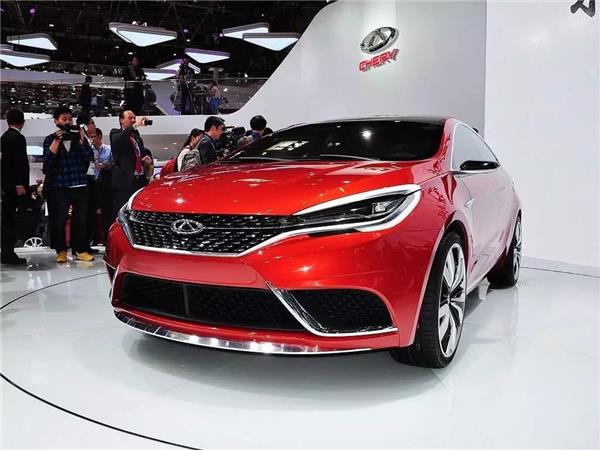
Shanghai (Gasgoo)- Baoneng Group reportedly plans to acquire stake of Chery Auto with a total of RMB 25-27 billion, and aims to be the biggest shareholder of the automaker. It is said that both parties will announce the merger and acquisition (M&A) as early as next month. Once the acquisition is finished, Chery Auto will transform from a state-owned company to a private automaker.
About half a year ago, a negotiating team, which is formed by representatives of Wuhu government, Wuhu Construction Investment Co., Ltd. and Chery's senior executives, had contacted with Baoneng Group and Industrial Bank Co., Ltd. with a purpose to get funds through selling a certain part of Chery's stake, due to the worsening cash flow of Chery and urgency of supplementing operating fund.
China auto market news, Baoneng Group Chery Auto M&A
The news that Baoneng will acquire Chery is not a secret any more, according to insiders of Chery. They also disclosed that Baoneng and Chery have been negotiating the acquisition for a long time, and the announcement will be released this month or next month.
It is also revealed by the person who is close to Baoneng that the group and Chery had reached a consensus on the stake acquisition. Both parties are just waiting for a proper time to expose it.
China auto market news, Baoneng Group Chery Auto M&A
It is rumored in last October that the ultimate goal for Baoneng's acquisition of Qoros is to acquire Chery. Local media also revealed that Yao Zhenhua, president of Baoneng Group once showed his intention of acquiring Chery Auto as early as in October, 2017.
Chery's M&A will benefit the automaker in the long run. On one hand, Baoneng can provide funds for Chery. On the other hand, the system advantages of private company will revive Chery. Besides, Chery boasts superior auto technologies in chassis, engine, platform, intelligent connection and autonomous driving. It is the product planning chaos, poor product definiton and unattractive design style, rather than lacking core technologies that result in Chery's sales slump.
All Rights Reserved. Do not reproduce, copy and use the editorial content without permission. Contact us: autonews@gasgoo.com.

2018年5月15日星期二

JAC, Cummins set up JV to manufacture engines

China auto market news, JAC Cummins engine JV, JAC Navistar
Shanghai (Gasgoo)- JAC and Cummins Sales and Service Singapore Pte., Ltd. (hereinafter referred to as Cummins) signed a contract on May 14 to set up a new engine factory, which is likely to be named as JAC Cummins Engine Co., Ltd.
On July 4, 2012, JAC and Navistar set up a 50:50 JV called JAC Navistar. Now Navistar desired to pull out the JAC Navistar and intends to transfer the 50% share of JAC Navistar to Cummins.
Therefore, JAC Navistar will be reorganized and then changed into a new JV with a capital form of 50:50. The new JV's registered capital will still be RMB 600 million. Both parties agreed that JAC Navistar's name will be changed as JAC Cummins Engine Co., Ltd., after the equity transfer. By virtue of the new JV's platforms, JAC can realize emission upgrade and performance optimization for light-emission and medium-emission engines, thus the value of the complete vehicles can be entirely improved.
According to the released statement, the new JV will specialize in researching & developing, designing, testing, manufacturing, assembling, promoting, marketing, importing and exporting diesel engine and its parts, and will also offer aftersales parts and services as well as the leasing of factory and equipment.
It is expected that the new JV will reach an annual production capacity of 250,000 engines after the JV starts production. The JV will manufacture engines in accordance with the business plan and budget approved by board of directors annually.
All Rights Reserved. Do not reproduce, copy and use the editorial content without permission. Contact us: autonews@gasgoo.com.
Highlights of BAT layouts in autonomous driving industry

BAT autonomous driving layout, Tencent self-driving road test license, Baidu Apollo
Shanghai (Gasgoo)- With Alibaba confirming driverless vehicle test last month, it has joined Baidu and Tencent – which are collectively known as BAT – in the autonomous driving industry. The three Chinese Internet giants currently race to make layouts in this booming field. Gasgoo sorted some events as below to show how BAT builds their own ecosystem around autonomous vehicles. 
Baidu
Possessing the splendid autonomous driving platform Apollo, Baidu runs much ahead of its two rivals, Alibaba and Tencent. Later in April, Apollo welcomed it 100th partner BYD. So far, the Internet giant has extended Apollo's partnerships across the world, including not only renowned automakers like FAW Group, Changan Auto and Great Wall Motor, but also some world-class Tier 1 suppliers such as Bosch and Continental AG.
Additionally, Baidu has heretofore obtained autonomous vehicle road test licenses from three cities, Beijing, Fuzhou and Chongqing.
On March 1, 2017, the company announced that it had established the Intelligent Driving Group (IDG) which was headed by Lu Qi, Baidu's COO and president. This was a significant step to speed up its autonomous driving cause through a massive integration of three units, the autonomous driving unit (L4), the intelligent vehicle unit (L3) and IoV (Internet of Vehicles) unit.
In capital market, Baidu also did a great number of investments and acquisitions. For instance, the company bought out tech startups like Raven Tech and KITT.AI last year and put investments in such companies as NIO, WM Motor and Shouqi Limousine & Chauffeur, which is currently a part of the Apollo ecology.
Tencent
Following Baidu, Tencent also obtained its first ICV (intelligent-connected vehicle) license plate from Shenzhen municipal government on May 14. The government only issued one plate this time to Tencent Autonomous Vehicle Laboratory, who has been allowed to test its autonomous vehicle on public road after the government designates the testing sectors.
Earlier in April, Tencent's autonomous vehicle made its first public presence on the Fourth Ring Road in Beijing. The autonomous vehicle is a white converted SUV equipped with a large-sized Lidar on the roof and cameras, millimeter-wave radar around the body.
On April 12, Tencent and Chinese automaker Chongqing Changan officially signed a cooperation agreement to establish an ICV joint venture. Both parties will focus on developing IoV integration solutions as well as relevant operational businesses and services.
A few days later, Tencent and the state-owned automaker FAW Group inked a strategic cooperation framework agreement in the Internet of Vehicles (IoV) area. The cooperation between two parties will focus on four major fields, scenario research, information security, IoV ecology as well as cloud platform and big data. Reportedly, Tencent's Keen Security Lab will provide FAW Group with IoV security solutions. Moreover, two companies will co-build service ecology relying on Tencent's technical resources of social search engine, electronic map, entertainment and payment instruments and make researches in such areas as AI, targeting marketing, big data analysis, etc.
FAW Group is Tencent's sixth automaker partner. In November last year, the Internet company launched its ICV solution dubbed “AI in Car” and announced the cooperation with GAC Group, Chongqing Changan, Geely Auto, BYD and Dongfeng Liuzhou.
Tencent's investments in automakers also reflect its ambition in auto area. In March 2017, Tencent had bought 5% share in Tesla and became the automakers' fifth largest shareholder. What's more, Tencent and Baidu had led a $600 million funding round in the Shanghai-based electric car maker NIO, who obtained China's first batch of ICV road test licenses in Shanghai along with SAIC Motor.
Alibaba
In the middle of April, Alibaba confirmed the news that it was researching and developing L4 (and higher level) driverless vehicle technologies. Meanwhile, some vehicles (reportedly, the Lincoln MKZ refreshed models) have already been tested on roads and dozens of vehicles have been under development. 
Besides, the company revealed that under the leadership of Professor Wang Gang, chief scientist of Ali A.I. Labs and one of MIT Technology Review's 35 Innovators Under 35 in 2017, the autonomous driving research was proceeding rapidly.
In January this year, Alibaba's iDST (Institute of Data Science and Technologies) took the championship in pedestrian detection, which also refreshed its ranking in KITTI, the global authoritative leaderboard in machine vision algorithm. Meanwhile, in a competition raised by the renowned dataset of pedestrian re-identification the Market1501, Alibaba ranked No.1 worldwide with its first-target hit rate up to 96.17%.
In September last year, Alibaba officially announced that its operation system YunOS would be upgraded into AliOS with driving scenarios as highlight.
Before that, Alibaba and SAIC Motor built a joint venture dubbed Banma to offer integral Intelligent-connected vehicle solutions to auto industry.
Alibaba also became one of major investors of Chinese EV startup Xpeng Motors whose founder and chairman were former president of Alibaba Mobile Business Group. Moreover, the Internet giant also put investments in some AI companies, such as Face++ and SenseTime, and several AI chip providers like Cambricon and DeepPhi Tech.   
All Rights Reserved. Do not reproduce, copy and use the editorial content without permission. Contact us: autonews@gasgoo.com.
Beijing Benz to roll out 4 EQ all-electric models

Mercedes-Benz China NEV planning, BMW China news, BAIC production capacity
Shanghai (Gasgoo)- Beijing Benz will manufacture Benz's electric vehicle (EV) model in the BAIC's plant in Shunyi district of Beijing (hereinafter, Shunyi plant), which was used to manufacture the models under BAIC Senova, according to local media.
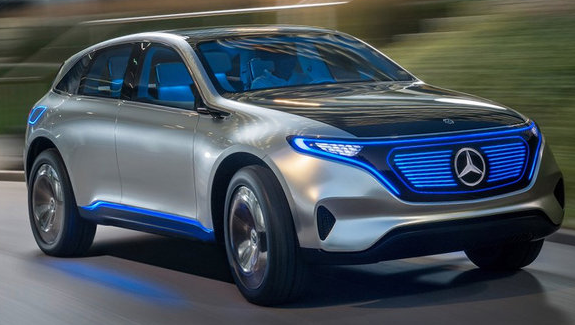
Beijing Benz plans to roll out 4 homegrown EV models of Mercedes-Benz EQ Series, covering SUVs and sedans, in accordance with the company's NEV planning. The first model EQC, which holds a range up to 500km, will roll off the production line in 2018.
According to relevant information, founded in 2011, the Shunyi plant was used to produce such models as the Senova D70, the Senova X55 and BAIC BJEV's EU260, etc. Its annual production capacity had increased to 30,000 units after the second phase was completed. Beijing Benz took over the plant, then remolded it in line with the Germany Industrie 4.0 to manufacture a series of all-electric models based on Mercedes-Benz modular platform for all-electric cars. Meanwhile, Beijing Benz will establish a battery factory to support the Shunyi plant's production.
As Mercedes-Benz's old adversaries, BMW and Audi also make planning to locally produce EVs in China. At Auto China 2018, BMW unveiled a concept model of the iX3, which will be officially locally produced in 2020. In addition, Audi has a blueprint to launch 4 EV models in the next four years, including the Audi e-tron, the Q2 e-tron, etc.
It is worth mentioning that Benz has gained a head start over BMW and Audi in the NEV competition. The all-electric EQC SUV will roll off production line in 2018 and officially go on sale in the next year, which runs ahead of BMW and Audi in proceeding with EV localization. Additionally, Benz's EQC, featuring the modular design, enjoys a range up to 500km, which is more than the 400km-range of BMW's iX3 and Audi e-tron.
All Rights Reserved. Do not reproduce, copy and use the editorial content without permission. Contact us: autonews@gasgoo.com.
Beijing gets largest BMW R&D center outside of Germany


BMW China R&D center, BMW ICV road test
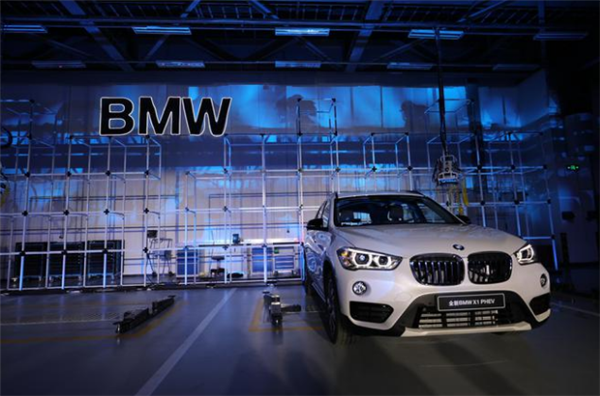
Shanghai (Gasgoo)- German luxury vehicle brand BMW officially opened a R&D center in Beijing on May 15. This is the third BMW's R&D center in China, also the company's largest R&D center aside from its German headquarter.
BMW currently owns three R&D centers in China, including the Beijing center, the Shanghai center and the Shenyang center. Based on a clear division of roles and responsibilities, the Beijing center will be responsible for the strategies formulation, consumer demands’ management, vehicle testing and verification as well as the product localization R&D. Shanghai center is mainly in charge of the technological innovation, innovative design research and the application of digitalization. Moreover, the Shenyang center, in the vicinity of a power battery center, focuses on NEV (new energy vehicles) development, production vehicle qualification control, etc.
Reportedly, the Beijing R&D center, covering an area of over 26,000 square meters, involves an investment of RMB 200 million in total. It will be dedicated to the verification and on-line diagnosis of whole series of BMW's models, including NEVs, hybrid vehicles, intelligent vehicles and the next-generation high-efficiency engines, and the R&D of core parts in NEV and self-driving area.
On May 14, BMW obtained two license plates for the ICV (intelligent-connected vehicle) road test from Shanghai municipal government, becoming the first multinational automaker that is allowed to test ICV on roads, according to official WeChat account of Shanghai Municipal Commission of Economy and Information.
All Rights Reserved. Do not reproduce, copy and use the editorial content without permission. Contact us: autonews@gasgoo.com.